A natural-fiber bedding guide
Libeco Bedding: How Belgian Flax, Weaving, and Finishing Shape Fabric Character
Linen’s appeal is more than its quietly rumpled look. The journey from flax plant to finished bedding—including where the fiber grows, how yarns are woven, and what happens during finishing—helps determine whether a fabric feels crisp, fluid, substantial, or soft against the skin.
Published November 2, 2026
There is a certain ease to a linen-made bed. The surface is rarely perfectly smooth, and that is part of the pleasure: subtle creases catch the light, the fabric falls in relaxed folds, and the room feels composed without looking overly arranged. Yet linen is not one single texture. Two sets of bedding can both be described as linen and still feel noticeably different in weight, drape, surface, and behavior after washing.
That difference comes from a chain of decisions. Flax is grown and harvested; its fibers are prepared and spun into yarn; those yarns are woven into cloth; and the cloth is finished for its intended use. When people compare Libeco bedding or other Belgian linen, these stages offer a practical way to look past a color name or a polished product description. They help explain what the fabric may feel like on night one—and how it might change after months of use.
Belgium has a long-standing association with linen production, and Libeco is a Belgian linen maker. But a national label alone does not tell the whole story of a particular textile. Fiber origin, construction, weight, finishing, and care all matter. Understanding those details turns shopping into a more useful conversation about comfort and durability, rather than a guessing game based on photographs.
Start with flax, not the finished sheet
Linen begins with flax, a plant cultivated for its useful stalk fibers. The fibers are separated from other parts of the plant, processed, and eventually spun into yarn. The specific growing conditions and processing methods can influence the character of the raw material, but “Belgian flax” should not be treated as a promise that every stage of production took place in Belgium. A product’s label or maker’s documentation is the best place to check what a country-of-origin statement actually refers to.
That distinction matters because textile supply chains can cross borders. Flax might be grown in one location, processed or spun elsewhere, woven in another, and finished in a further facility. A clear description may identify some or all of those steps; a short label may simply name the fabric or the brand’s home country. Neither format automatically tells you everything about provenance. When origin is important, look for precise language about the fiber itself and where the cloth was made.
Flax fibers are known for their strength and for a crisp, slightly irregular character that is part of linen’s appeal. The finished fabric’s hand, however, cannot be predicted from fiber identity alone. Spinning choices affect yarn thickness and consistency. Weaving brings those yarns together in a particular structure. Finishing can then soften, relax, or otherwise alter the cloth’s surface. The familiar linen feel is the outcome of the whole process, not just the plant.
For bedding, the useful question is not simply “Is it Belgian?” but “What does this particular linen feel like, and how is it made?” Look for details such as fiber content, stated origin, fabric weight when available, weave description, and care instructions. A maker that supplies those details gives you more meaningful information than a broad claim about natural materials alone.
Weaving is where yarn becomes a surface
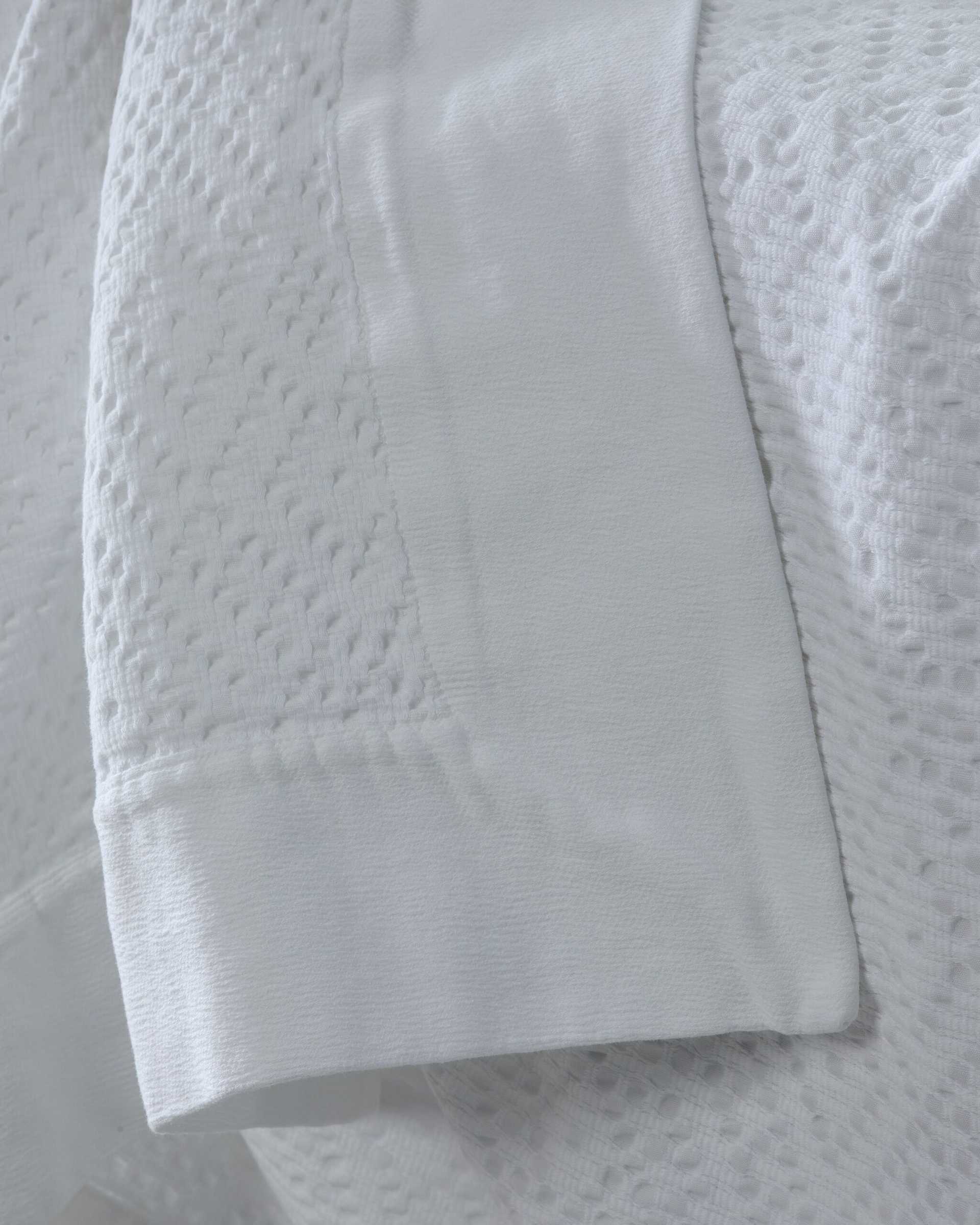
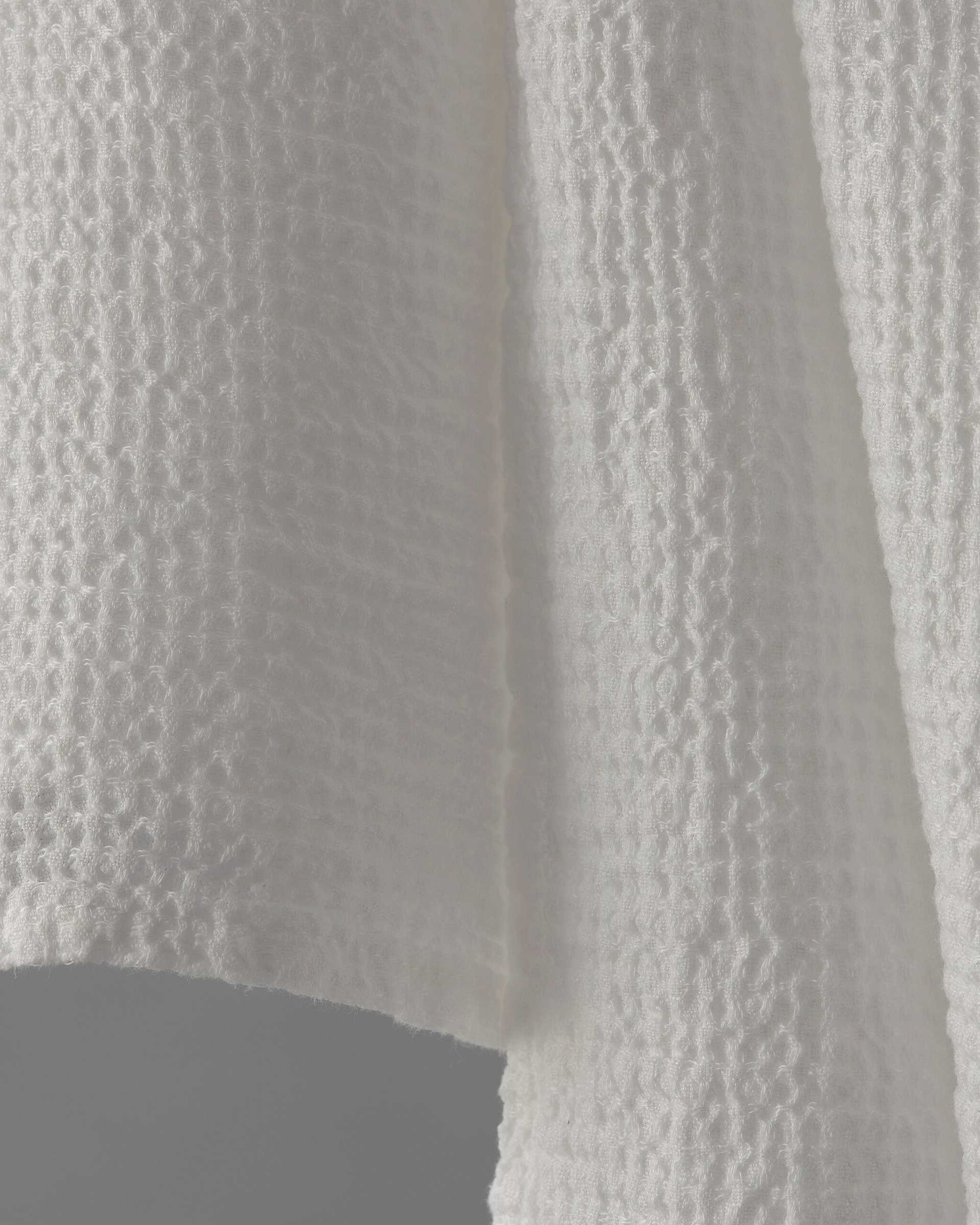
Weaving interlaces lengthwise yarns, called the warp, with crosswise yarns, called the weft. The arrangement, yarn size, and density shape how the cloth looks and behaves. In bedding, these decisions can influence whether linen feels airy and yielding or more compact and structured. They also affect how the fabric drapes over a mattress and whether its surface appears smooth, textured, or visibly uneven.
A plain weave is a familiar construction in which the yarns cross in a straightforward over-and-under pattern. It can produce a balanced, dependable cloth, although the finished result still varies with yarn and finishing. Twill, recognizable by a diagonal pattern, can have a different surface and drape. Other weave structures may emphasize texture or create a more open, dimensional appearance. A weave name is a clue, not a complete specification: thread size, density, and finishing remain part of the picture.
Weight is another helpful point of comparison. A heavier fabric may feel more substantial in the hand and fall in broader folds, while a lighter one can feel more relaxed and airy. But weight does not, by itself, determine quality or comfort. A dense, heavy cloth may be less appealing to someone who wants a light cover, while a lighter textile may not provide the same sense of substance. The intended use and personal preference matter just as much as the number.
When product information includes weight, check how it is expressed and compare like with like. A measurement may refer to the textile per square metre or another standard unit; it is not the weight of an entire sheet set. If no weight is listed, descriptions such as “lightweight,” “medium-weight,” or “substantial” can offer a broad guide, but they are not standardized across every maker.
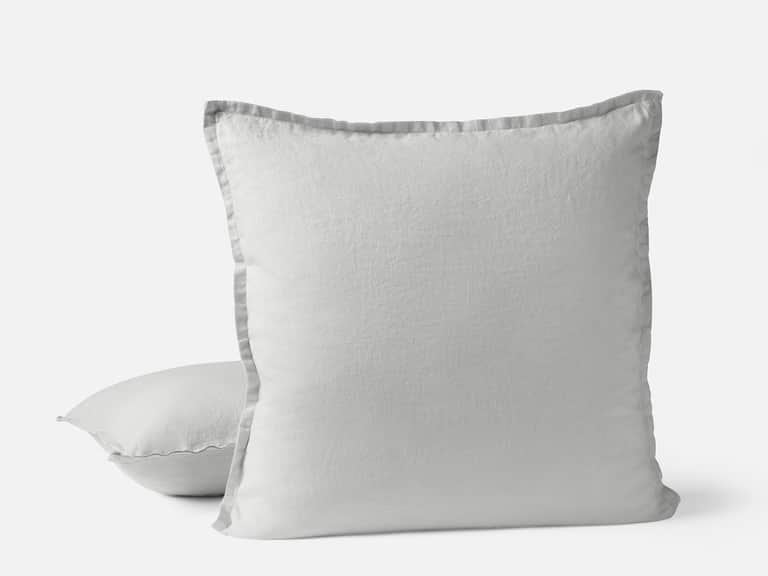
Construction also affects the way bedding settles on the bed. A more fluid linen may fall softly over the edge, while a firmer cloth can hold a tidier outline. Neither is inherently better. Some sleepers prefer a breezy, relaxed layer; others enjoy a fabric that feels grounded and has a little more structure. If you are comparing options in person, handle the cloth, scrunch it gently, and notice whether it springs back, holds creases, or falls into soft folds.
Why finishing changes the first impression
Finishing describes treatments applied after weaving to prepare fabric for use and shape its final appearance or hand. The exact process varies, so terms like “washed,” “softened,” or “relaxed” are useful descriptions but not full technical explanations. They can indicate that a cloth has been treated to reduce a crisp, newly woven feel, yet the results depend on the fabric and the method used.
A washed finish often gives linen a more lived-in look from the start. It may feel softer or less rigid than unwashed cloth, and its surface can appear gently crinkled. That does not mean the fabric has been made delicate; nor does it guarantee a particular level of softness. The construction and fiber remain important, and the texture can continue to evolve as the bedding is laundered and used.
Other finishing choices may emphasize a smoother surface, a more tailored appearance, or a pronounced natural texture. Color treatments and dyeing are also part of a textile’s visual character. For a buyer, the best approach is to read the language carefully and distinguish a description of appearance from a measurable performance claim. “Relaxed” speaks to style and hand; it does not, on its own, confirm shrinkage behavior, colorfastness, or a specific lifespan.
Finishing helps explain why two linen fabrics with similar fiber content can feel unlike each other when new. It also explains why first impressions do not tell the whole story. A crisp linen may soften with regular use, while a pre-washed fabric begins closer to that broken-in feeling. If you are choosing a set for a particular season or preference, consider both the initial hand and how much change you are comfortable with over time.
Comfort is personal—and linen is a fabric, not a temperature guarantee
Linen is often described as breathable and comfortable in warm weather. Its open, textured character can feel less clingy than some smooth fabrics, and many people enjoy how it sits against the body. Still, no fiber can promise the same sleep experience for everyone. Room temperature, the rest of the bedding, personal warmth, and individual preferences all influence comfort.
One sleeper may love the tactile texture of linen immediately; another may find new linen a little crisp. Some appreciate its characteristic creasing, while others prefer a neatly pressed surface. These are not defects or signs of better taste—they are different expectations. If you want a softer first impression, a washed finish may be worth considering. If you enjoy a more defined, structured hand, an untreated or firmer cloth could be appealing, depending on the product’s description.
It is also useful to separate softness from smoothness. Linen can feel soft without having the sleek surface of certain cotton weaves. Its irregularities and natural texture are part of the material’s identity. A product that is described as soft may still have visible slubs or creases, while a smooth-looking linen may retain a dry, crisp feel. Words in listings can be subjective, so detailed specifications and, when possible, touch are valuable.
Care that respects the fabric’s character
Good care begins with the instructions provided for the specific bedding. Linen products may differ in dye, finish, construction, and trim, so a general rule should never override the maker’s label. In broad terms, gentle laundering, appropriate detergent, and avoiding unnecessary heat are sensible habits for many natural-fiber textiles. But the exact water temperature, drying method, and ironing guidance should come from the product’s care information.
Before washing, close zippers or fastenings if the design includes them, and avoid overcrowding the machine. Fabric needs room to move through the wash and rinse. Wash similar colors together, especially when a textile is new or strongly dyed, and use a detergent suited to the care instructions. Chlorine bleach can damage fibers or affect color, so do not use it unless the label specifically permits it.
Overdrying can make natural fabrics feel harsher and may contribute to unnecessary wear. If tumble drying is allowed, follow the stated heat setting and remove the bedding promptly. Line drying is an option where practical and permitted by the care label. Linen naturally forms creases, so there is no need to chase a perfectly pressed finish unless that is the look you prefer. Ironing while the fabric is slightly damp may help create a smoother result when the instructions allow it.
Expect a natural textile to change with use. Linen can become more supple through repeated laundering, while its characteristic texture remains. That gradual softening is different from a guarantee that a fabric will never shrink, fade, or wear. Correct care can help preserve its appearance and strength, but results depend on the cloth, how often it is used, and the conditions in which it is washed and dried.
How to compare Libeco bedding with other linen
Comparing brands becomes easier when you use the same checklist for each option. Start with fiber content: is the bedding described as pure linen, or does it include a blend? Then look for the stated fiber origin and where the fabric was woven or made. A clear distinction between these details helps you understand exactly what the maker is claiming.
- Fiber and provenance: Check whether the label identifies linen content, flax origin, and manufacturing location separately.
- Weave and weight: Look for construction details and a stated fabric weight, if available, to help estimate structure and drape.
- Finish: Note whether the cloth is washed, softened, or described as crisp, and remember that these words are not universal standards.
- Care: Compare washing and drying instructions before choosing, especially if you need easy laundering.
- Design details: Consider closures, seams, hems, and sizing as well as the main fabric.
- Documentation: Look for precise material information and avoid treating broad sustainability language as a substitute for specifics.
Libeco bedding may appeal to someone drawn to Belgian linen and the character of a traditional natural fiber. Still, the brand name is only one part of the decision. Compare the actual construction and care guidance for the particular duvet cover, sheet, or pillowcase you are considering. Within a single maker’s range, different weights, finishes, and weaves can produce distinct experiences.
Price can also reflect factors beyond the visible fabric, including production, design, finishing, and distribution. A higher price is not a stand-alone measure of longevity or environmental benefit, just as a lower price does not automatically mean a textile will disappoint. Specific product information is more useful than assuming that cost, country, or a “natural” label tells the entire story.
The sustainability question, carefully considered
Flax is a plant-based fiber, and linen is often included in conversations about more responsible textiles. But sustainability is not a simple yes-or-no label. Farming practices, processing, dyeing, energy and water use, worker conditions, transport, product lifespan, and end-of-life options all contribute to a textile’s overall impact. A natural fiber can still be produced through processes that deserve scrutiny; a broad environmental claim needs context.
Useful questions include whether the maker provides traceable sourcing information, what certifications apply to the exact product, and what those certifications cover. A certificate may address a defined part of production or a particular standard; it should not be assumed to answer every question about environmental or social performance. Look for named standards and clear explanations rather than relying on vague phrases such as “eco-friendly.”
Durability and care are part of the conversation, too. Bedding that suits your needs and remains in use for a long time can avoid premature replacement. Choosing a finish you enjoy, following the care label, and repairing small issues where practical can help you get more use from a set. These everyday choices do not replace transparent manufacturing, but they are a meaningful part of how textiles are used.
A practical way to decide what feels right
Before choosing linen bedding, picture how you want the bed to feel and look on an ordinary morning—not just in a styled photograph. Do you prefer a crisp surface or a softened, already-relaxed one? Is a substantial drape appealing, or would you rather have a lighter layer? Are visible creases part of the charm, or do you want to iron regularly? Honest answers can narrow the field more quickly than chasing a supposedly perfect specification.
Then match those preferences to the available details. A washed finish may suit someone seeking a gentle, lived-in appearance. A more structured weave may appeal to someone who likes a defined outline. A published weight can help with comparison, but it should be considered alongside weave and finishing. If the details are unclear, ask the seller or maker rather than trying to infer everything from the word “linen.”
Finally, treat care as part of the purchase, not an afterthought. A fabric that requires handling you dislike may not be the best everyday choice, however beautiful it looks. Linen can be a rewarding bedding material precisely because it has character: it creases, softens, and develops a familiar feel through use. Understanding how flax sourcing, weaving, and finishing shape that character makes it easier to choose a set you will genuinely enjoy living with.
The takeaway
Libeco bedding and other Belgian linen are best understood through the details behind the cloth. Flax origin describes one part of the supply chain; weaving determines much of the fabric’s structure; finishing shapes its first impression and surface; and care influences how it performs over time. No single label tells the complete story, but together these clues make a more informed comparison possible.
Look beyond color and styling to the fiber content, provenance, weave, weight, finish, and instructions for washing. Then weigh those facts against your own preferences for texture, drape, and upkeep. The result is a more confident choice—and a bed that feels less like a showroom arrangement and more like a natural part of everyday life.