Bath Towels & Linen Textiles
How Weave Structure Shapes Bath Towel Absorbency and Drying
A towel’s feel and performance come from more than its fiber. The way its yarns cross, loop, or rise into a textured surface helps determine how it takes up water, rests against the skin, and dries between showers.
Published October 16, 2026
A bath towel is part of a small daily ritual: reach, wrap, pat dry, hang it up, and hope it is ready again by morning. Yet towels that look similar on the shelf can behave quite differently once they meet wet skin. One may feel plush and enveloping; another may be lighter, more textured, and ready to dry sooner. A big part of that difference is weave structure.
The weave is the arrangement of yarns that creates a fabric. In towels, two familiar constructions are looped terry and waffle weave. Terry is associated with the soft, raised loops found on many conventional bath towels. Waffle fabric has a grid-like pattern of recessed squares and raised ridges. Both can absorb moisture, but their structures offer different balances of surface area, weight, hand feel, and airflow.
That distinction matters in real bathrooms, where humidity, ventilation, washing habits, and personal preference all shape how useful a towel feels. Understanding the relationship between towel weave, fiber content, and weight makes it easier to choose a textile that suits your routine—not just one that feels appealing in a store.
What a weave changes
Fibers have their own characteristics. Cotton is widely used in towels for its familiar softness and ability to take up moisture. Linen, made from flax, has a distinctive hand and can feel crisp or textured, especially when new. But fiber is only one part of the story. The yarns’ layout determines how much fabric is exposed, how air moves through it, and how the surface meets water and skin.
A towel’s construction can create a large, lofty surface or a more compact, patterned one. In general, greater exposed surface area can help a textile make contact with moisture, while open spaces in a weave can allow air to circulate. Those factors work together rather than in isolation. A very dense towel, for example, may feel substantial but take longer to dry in a poorly ventilated bathroom. A lighter towel may dry more quickly but feel less plush or provide less of the enveloping sensation some people enjoy.
It is tempting to reduce towel performance to a single claim—“more absorbent” or “faster drying”—but everyday results are influenced by several variables. Fiber, yarn thickness, density, finish, towel size, laundering, and even how thoroughly the towel is shaken out and hung can all affect the experience.
The familiar comfort of terry
Terry towels are built with loops that extend from the fabric’s base. Those loops create extra surface area compared with a flat construction, giving water more places to meet the yarn. The raised pile also contributes to the soft, cushioned feel that many people associate with a classic bath towel.
Loop height and density influence how a terry towel feels and performs. Taller loops can make a towel feel fluffy and generous, while a denser pile may give it a weightier hand. But looped construction does not automatically mean a towel will suit every bathroom. A thick, substantial towel can hold more moisture in its structure and may need more time and airflow to dry fully. In a steamy room with limited ventilation, that can become a practical consideration between uses.
Terry remains a popular choice for people who want plushness, familiar softness, and a substantial wrap after bathing. It can be especially appealing in a cool climate or for someone who likes a towel that feels warm and cushioned. If quicker turnaround is the priority, though, it is worth looking beyond the word “terry” and considering the towel’s weight, fabric composition, and care instructions.
Why waffle weave feels different
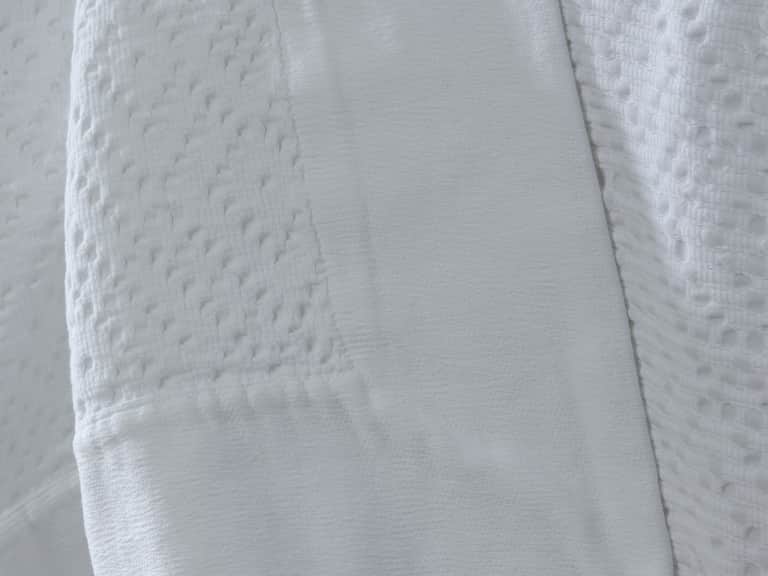
A waffle weave forms a three-dimensional grid, with raised ridges surrounding small recessed cells. This structure gives the towel a noticeably textured surface without using the same continuous pile found in terry. The pattern also creates open spaces that can help air move around the fabric as it hangs.
That airy quality often makes waffle towels feel lighter and less bulky. They can be easier to fold, store, and pack than a thick towel, and their textured surface offers a different kind of contact with the skin. Some people enjoy the gently tactile feel; others prefer the smooth plushness of a looped towel. There is no universal winner—comfort is personal, and construction is only one part of it.
Waffle structure is used with different fibers, so the name alone does not tell you exactly how a towel will behave. A cotton waffle towel and a linen waffle towel may share a recognizable grid but differ in softness, weight, and handling. The yarn and fiber content matter, as do finishing and laundering. It is useful to think of “waffle” as a description of the fabric’s architecture, not a complete performance guarantee.
A pure-linen example is the Lipe New Towel Set, described as woven from 100% linen in a traditional waffle pattern. Its construction brings together linen’s characteristic texture and a three-dimensional weave. It offers a helpful illustration of how fiber and structure combine: the towel is not simply “linen” or simply “waffle,” but both at once.
Absorbency is a combination, not a contest
When people compare towels, absorbency is often the first question. But absorbency has more than one dimension. How quickly does the towel pick up moisture on contact? How much moisture can it hold? How does it feel while doing so? And how soon can it release that moisture as it dries?
A towel’s raised or textured surfaces can increase the area available for contact, while fiber properties influence how water interacts with the yarn. A terry towel’s loops create an abundant surface; a waffle towel’s ridges and recesses create a patterned one. Neither structure alone determines the final result. A towel’s density, yarn quality, finish, and condition after repeated washing also play a role.
It helps to distinguish immediate moisture pickup from total capacity. A towel may feel quick to absorb at first touch, yet a heavier or denser construction may hold more water overall. Another towel may feel lighter and be easier to dry between uses, even if it does not provide the same plush, saturated feel. What counts as “best” depends on whether you value a fast, light pat-down or a thick, comforting wrap.
Drying time depends on the room, too
No towel dries in a vacuum. Bathroom ventilation, room temperature, humidity, and the way the towel is hung all make a difference. A damp towel folded over itself has less exposed surface than one spread across a rail. If air cannot move around the fabric, even a relatively light construction may remain damp longer than expected.
Waffle towels are often appreciated for a lighter profile and an open, dimensional structure. These features can help them feel less bulky when hung, which may be useful in a small bathroom or for households that cycle through towels frequently. A thick terry towel may take longer to dry if it is densely piled or hung in a humid, still space. But neither weave guarantees a particular drying time: fiber, dimensions, and conditions matter.
For a practical comparison at home, notice how long a towel takes to feel dry after a normal shower, rather than relying on a product label alone. Hang it fully open when possible, give it room to breathe, and pay attention to whether the bathroom remains damp. If a towel is still wet when you need it again, the cause may be the room’s airflow as much as the textile itself.
Weight and size: useful clues, not verdicts
Towel weight is sometimes shown as grams per square meter, or GSM. It can offer a rough sense of how light or substantial a towel may feel, but it is not a complete measure of quality or absorbency. Two towels at a similar weight can feel different because their fibers, yarns, and weaves are not the same.
A heavier towel may feel luxurious and substantial, but it may demand more storage space and longer drying time. A lighter option may be convenient for frequent laundering, travel, or a compact bathroom. Size matters as well: a large bath sheet contains more fabric than a standard bath towel, so it can take longer to dry even if the construction is relatively open.
When comparing labels, look at weight alongside fiber content, weave, dimensions, and care guidance. Consider the whole routine: how many people use the towel, how often laundry is done, whether a dryer is available, and how much hanging space there is. These ordinary details may matter more than a headline specification.
Linen’s tactile character
Linen has a recognizable texture that can feel different from the smooth, plush sensation of many cotton terry towels. Its appeal often lies in that natural hand and in the way a woven surface can feel light and tactile. In a waffle construction, the grid gives the fabric added dimension, making the texture particularly noticeable.
A new linen towel may feel firmer or less soft than someone expects, and its hand can change with use and laundering. That does not mean every linen towel will become exceptionally soft or behave identically; finishing, yarn, and care all matter. If softness is a priority, check the maker’s description and follow the recommended washing instructions rather than assuming that all linen starts—or ends—with the same feel.
The Lipe New Towel Set’s stated combination of pure linen and traditional waffle weave highlights a useful principle for choosing bath textiles: consider the experience as a whole. The material sets one part of the character; the construction shapes another. Together they create the towel’s texture, drape, and everyday feel.
Care habits that protect performance
A towel’s performance can change when detergent, fabric softener, heat, or residue builds up on the fibers. Always begin with the specific care instructions supplied with the towel. General advice can be useful, but it should not override guidance for a particular fiber or finish.
For linen waffle towels, the available care details for the Lipe New Towel Set do not specify a full laundering routine. Follow the product’s current instructions and avoid guessing about temperature or drying settings. For towels with clear care labels, use a suitable amount of detergent, avoid overloading the washer, and allow enough space for the fabric to rinse thoroughly. Excess detergent can leave residue, while aggressive treatment may affect fibers or color over time.
After washing, shake the towel out and hang it so air can reach as much of the surface as possible. This small step helps prevent the fabric from drying in a compressed bundle. If a tumble dryer is permitted, use the setting recommended on the care label and avoid excessive heat. A towel that is treated gently and allowed to dry properly is more likely to remain pleasant in regular rotation.
Choosing for your bathroom routine
If a plush, cushioned feel is your priority, terry may be the natural place to start. Look at pile, weight, dimensions, and care requirements, and make sure the towel has enough room to dry between uses. If you favor a lighter, more textured towel—or have limited storage and hanging space—a waffle construction may be worth considering.
For a humid bathroom or a household that washes towels often, think beyond the weave name. A lighter construction may be easier to manage, but ventilation and hanging habits remain important. For someone who enjoys a tactile surface and the character of flax, a linen waffle towel may be appealing. For someone who wants the familiar softness of a fluffy wrap, terry may feel more satisfying.
If possible, assess a towel in person. Feel its surface, notice its weight, and check the label for fiber content and care. If shopping online, read the construction details closely and look for dimensions, fiber information, and specific laundering instructions. Avoid treating broad phrases such as “quick drying” as a guarantee; the towel’s size and your bathroom conditions still shape the outcome.
A thoughtful choice, one everyday detail at a time
Towel weave may seem like a small technical detail, but it has a direct effect on daily comfort. Terry’s loops create a plush surface with abundant contact points. Waffle’s raised grid and open cells offer a lighter, distinctly textured alternative. Each construction can be useful, and neither is automatically superior for every person or setting.
The most satisfying choice comes from matching the towel to the routine: how it feels on skin, how much space it takes up, how often it is washed, and how quickly it needs to be ready again. Fiber content and weight add essential context, while care and airflow help preserve performance over time.
Once you know what to look for, the choice becomes less about chasing one perfect specification and more about finding a balance that works. A well-chosen towel should feel right in your hands, suit your bathroom, and make an everyday moment a little more comfortable.
The quick take
- Terry: Looped construction creates a plush, raised surface that many people associate with a classic bath towel.
- Waffle: A three-dimensional grid creates a lighter, textured feel and an open structure.
- Absorbency: Depends on fiber, weave, density, finish, and towel condition—not construction alone.
- Drying: Towel weight, size, bathroom humidity, ventilation, and how it is hung all make a difference.
- Care: Follow the towel’s specific instructions and hang it with enough space for air to circulate.